Following National Highway 9 towards Chongde, you'll see two indigenous totem carvings at the foot of the mountain. Turning into the hills feels like entering a pristine jungle's backyard. "Dakili" means many stones; here, doors are never locked at night, and dogs guard the homes. Spaces for outdoor dining are built from native wood and bamboo groves, offering views of the sea with fresh air.
"Bi ya su ho" is a greeting in the Truku (Taroko) indigenous language. Mrs. Peng Xiu Lan (Mrs. Tian) greets guests warmly with her welcoming smile. Over 12 years, her dedication to crafting indigenous cuisine has earned recognition, as important domestic organizations introducing foreigners to Taiwan's aboriginal food always begin at this location.
There is no fixed menu; the dishes mainly feature wild vegetables grown in their three-part land plot, including wild tomatoes, pumpkins, taro, nightshade, and spoon flowers, which can be picked on the spot. In July and August, clusters of bananas can also be gathered and shared with guests at the restaurant. A 40-year-old camphor tree stands along the forest trail, while nearby the coast range is the Taroko National Park. This farmland remains entirely in its original ecology without any introduced species, resembling a hidden paradise.
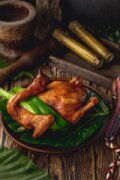
Mrs. Hsiulan hopes to share the flavors of indigenous ingredients through her efforts. Her signature dishes include lemongrass snapper, grass-fed heart vegetables stir-fry, and native black pork barbecue. The "Eight Tonic Wild Vegetables" features rare indigenous ingredients like wild bamboo shoots, breadfruit seeds, taro fruit, and croton seeds, representing unity among indigenous wild vegetables.
Tables, chairs, cutting boards, and serving platters used here are all crafted from driftwood by Mr. Guo Wen Gui (Mr. Tian's husband). The dining atmosphere carries a faint scent of cedar. In addition to meals, visitors can also reserve workshops for stone painting and wood carving to experience the cultural essence of the Taroko people from within.