Nangong Village (Mei Creek Indigenous Highland Tribe) is located about 15 minutes from Puli along Provincial Highway 14 toward Wushe, a gateway to Qingjing or Rusan hot springs. The village's residents are predominantly of the Sediq ethnic group. Long renowned for the Menggu Waterfall, the area attracted numerous weekend tourists, and thus under government initiatives for rural transformation, Nangong became the first locality in the region to transition into a leisure farm in its early stages. However, in 2004, mudflows caused by the July 2 Water Disaster buried the Menggu Waterfall and leveled the area completely, deterring tourists from visiting.
"A crisis is an opportunity; is it not also a business opportunity?" Previously distant members, akin to parallel lines, began intersecting through continuous discussions after recognizing the tribe's crisis. Reaching a consensus that a new strategy was necessary, with assistance from local agricultural associations and funding from Executive Yuan's Council of Agriculture Rural Women Subsidy Project for Developing Side Businesses, the "Tina Auntie—I-Na Atayal Country Cooking Class" was born amidst much anticipation in June 2005.
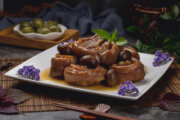
"Love is seeing one's own responsibilities in another's life." Led by class leader Ms. Jiang Chia-Mei, whose selflessness saved lives during the 2004 disaster, the Tina Auntie—I-Na Atayal Country Cooking Class gained renown for its traditional Atayal cuisine. Combining local ingredients with indigenous spices, the class harmonizes traditional and modern culinary demands. Signature dishes, such as Feng Huang Jade (Phoenix Jade) and Feasting Fish, use regionally farmed food like sweetfish, wild boar, mountain chicken, mountain Napa cabbage, cattle tomato, and golden tomato. Original ingredients like garlic chives, wild angelica root, mountain pepper, and native mountain shallots balance flavors. Not only reducing production costs, this approach offers consumers the freshest and most authentic local flavors.