"Village" is the ancient term for "cun". In 1995 (Minguo 84), the Sanyi Wooden Carving Museum opened, and along the two wooden carving streets on the way, artisans displayed their remarkable and extraordinary skills in carving, hence the village was dubbed "Divine Carving Village." A customer's joke at that time: "There are only wooden carving shops here; no restaurants. Do people here really eat wood?" sparked Mama Xue, known for her outgoing personality, to lead the way in opening a restaurant, specializing in ground tea, light meals, and local agricultural products, while also operating a homestay. In 2004 (Minguo 93), with the support of Mama Tian's joining, they firmly decided to introduce her mother-in-law's Hakka cuisine to the dining table, transforming into a multi-functional restaurant.
Mama Xue is a Minnan person from Changhua originally running a general store; her personality is cheerful and affectionate. As a bride into the Hakka family, she learned to cook Hakka dishes from her mother-in-law despite knowing nothing about cooking before marriage. She said, "Hakka people prefer salt over sweetness, and rarely add sugar to dishes. Because most Hakka communities live in mountainous areas with difficult access, they developed self-sufficient skills, making preserved radish, pickled mustard stems, and tangerine paste by themselves."
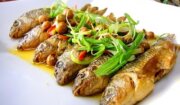
Dining here is economical and flexible with meal portions adjusted to the number of people. Dishes like "fermented bamboo-shoot-braised pork," "ginger-braised pork intestines," "Hakka stir-fried dishes," and "braised pork in preserved radish soup" embody authentic Hakka flavors; dishes can also change with seasons, and "stir-fried bamboo shoots" and "salted egg with bitter melon" are excellent appetizing options for your rice.
In antiquity, ground tea was a symbol of status, attainable only by those with sufficient grain after economic stability; thus, the dried grains could be used for making ground tea. Mama Xue explained, "Minnan people 'brew' tea leaves, Hakka people 'grind' tea leaves." Hakka ground tea involves grinding tea leaves, nuts, and grains in sequence into a fine powder, generating heat and stirring the mixture into a viscous paste, then scraping it down into a basin using a spoon and pouring hot water over it for drinking. Now, ground tea has become a symbol of Hakka culture; after waking up and drinking a bowl, the rich nutty and rice fragrance lingers in the nasal cavity for long, invigorating the body.