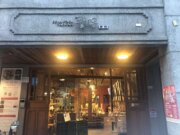
Wang Tea began in 1890 with a tea-making family from Anxi, Fujian. In Taipei’s Dadaocheng district it developed a business refining tea and exporting it to markets including Thailand, Japan, Europe and North America. The company describes integrity as a principle passed down through five generations. Tea chests once used for shipping, their metal nameplates and charcoal-roasting equipment remain on the premises, documenting how tea left Dadaocheng for overseas markets.
The front is a shop where visitors can buy and learn about Taiwanese tea. Behind it, the refining workshop is still in operation. The company selects and blends leaves according to their characteristics and sorts out stems by hand. In the roasting room, rows of woven bamboo baskets sit over charcoal pits for slow roasting. Wang Tea calls the method Qingyuan roasting. It describes gentle charcoal heat as drawing out layers of aroma in the tea, sometimes honey-like and sometimes reminiscent of orchids.
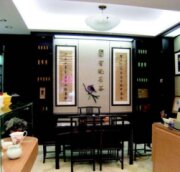
Workers once sorted tea upstairs. That floor is now Qingyuan Hall, a space for arts and cultural events. The objects used in the export trade, the tea workshop, the tastings and the cultural program trace the company’s development from exporter to a keeper of local tea culture.