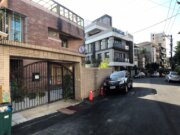
This bed and breakfast's roof and doors and windows are all made of hundred-year-old cedar, completed in 1934, and was the best house in Luzhu District at that time. It was also a resting place for officials riding horses on business from Danshui to Taoyuan and Hsinchu. The owner's ancestors were one of the founders of Lindong竹林山觀音寺, and later moved here. After experiencing changes in the times, this type of housing in Taiwan has become extremely rare, and the doors and windows are similar to those of the Danshui Red Hair Castle, witnessing the life trajectory and architectural features of Taiwan 88 years ago. Now, after maintenance and renovation, it has been restored to its former glory! We warmly welcome you to experience the life of a rural aristocrat 88 years ago, bringing you and your family and friends a full and happy memory!
1. Family History
In 1751 (the 9th year of the Qianlong Emperor), the Wang family's 9th generation, Ru Chong Gong, led three sons to move to Lindong, in the current East Lin Li area of Lindong, where they reclaimed the land, planted sweet potatoes, and supported their families. They ground the surplus sweet potatoes into flour and supplied it to Mengjia, working hard to establish the foundation of the family business, which was passed down from generation to generation. The Wang family's thatched hut is where the Wang family's mill was located, and it is also the origin of the name Lindong Powder House.
In the 11th generation, Zong Shun Gong moved to the Kengzi area of Luzhu, where he purchased land, planted rice and tea, established a home, expanded the family business, and served as a security officer, being enthusiastic about public welfare and local affairs. In 1949, the founder of the Lindong竹林山觀音寺, Wang Jinsheng, was the cousin of the ancestor Wang Chuanli.
This English-style Victorian building was designed by architect Yang Ahu and built in 1934, during the Japanese occupation, when Wang Chuanli was the president of the Wuyan Society. It showcases the fusion of Japanese and European styles at that time, serving as the residence for the family business and for getting close to neighbors and family.
In its heyday, four families lived inside, with more than 20 people, making it very lively. The owner also has photos of that time, which can be used as exhibition materials in the future. The Wang family's ancestral home has been standing for 88 years, having withstood earthquakes without any cracks in the walls, witnessing the life of rural aristocrats and filled with life stories of all kinds. This type of building is rare in Taiwan, with most having been demolished due to urban development.
2. Old House Architectural Features
The "Lindong Victoria Bed and Breakfast" was built by Wang's grandfather and completed in 1934, during the Japanese occupation. At that time, Japan was undergoing a Westernization movement, imitating the advanced countries of Europe and the United States, and this type of building, which combined Japanese and European styles, was very popular.
It is similar to the administrative office on Jinhua Street in Taipei, and similar architectural styles can still be found in the countryside of Japan and Italy today. This type of house is rare in Taiwan due to its age, and it is even more rare to find one that has been completely preserved.
The building materials used hundred-year-old cedar for the roof and main pillars, with brick-concrete structures for added support. The load-bearing walls are made of two layers of bricks, which can counteract the force of earthquakes. Although it has been used for 88 years, it is still sturdy and durable, warm in winter and cool in summer.
The exterior of the building is equipped with imported British wooden doors and windows, with a unique design and a pull-up and pull-down window form. The windows are taller than the common specifications in Taiwan, making the interior well-ventilated and bright.
The door specifications are also different, with a shorter proportion compared to the common doors in Taiwan, and the doors in different positions of the building have different heights, showing the different levels of space in the building, which is very distinctive and different from the usual architectural experience in Taiwan.
3. Located in a rich natural environment
This building is located in the Kengzi area of Luzhu, which is one of the earliest inhabited areas in Taoyuan. However, since 1970, most of the land in this area has been included in the Lindong Urban Planning Area, resulting in a significant outflow of population, and the original life and historical culture have gradually faded away.
The early rice fields and tea gardens were quickly abandoned due to industrialization. However, as a result of years of control, the development of the area has been delayed, but the original Minnan lifestyle has been preserved, and the surrounding environment has been spared from the threat of industrial pollution.
Over the years, the mountains and fields have become wild, forming a good habitat for wild plants and animals, unintentionally creating a rich natural landscape, which is different from the surrounding Nanjiang and Lindong new town, and has become the "back garden" of Luzhu.
In recent years, the owner, Mr. Tony Wang, has felt that urban life is too busy and has recalled the simple life environment of his early years. After retiring as the financial director of a foreign company, he began to work on the environment around the old house, starting from scratch, and has been working hard to create a garden, clearing weeds and doing gardening, which has been very fulfilling.
At present, there is a fragrant herb garden and various local landscape plants, which bloom and fragrant flowers in different seasons, making the scenery beautiful, such as cherry blossoms, osmanthus, camphor trees, and tea flowers. There is a natural mountain trail in the back, and the front has the Chitouqi Creek Ecological Park, the Kengzi Creek Leisure Agriculture Area, and the nearby Yangtoukeng trail, providing various choices for outings, and the evenings are very cool, with a beautiful moon rising in the sky, adding more beautiful time.