In its early days, Yuanli was hailed as the “Mat-grass Hometown.” Enter the town and you would see fields of mat rush growing everywhere. The plant’s stems are soft yet strong, absorb moisture, and neutralize odors—ideal for weaving. As early as the Qing dynasty local women were already plaiting the rush into sleeping mats. Through development and refinement, the Japanese era saw the creation of elegant rush hats: light in weight and naturally fragrant, they became a specialty sold around the world.
By 1936 exports of these hats peaked at more than ten million pieces a year. In those days, one woman skilled in rush weaving could support an entire household, so the traditional idea that men were superior to women did not apply in Yuanli; folk songs even sang, “Better to raise a girl than a boy,” giving a glimpse of the industry’s former glory.
With the passage of time, hand weaving was replaced by machines. Rising wages also lured women from home looms to factory jobs; rush fields dwindled, and the industry faded into history. To preserve these memories, the Yuanli Farmers’ Association established the “Mat Rush Cultural Center,” aiming to showcase local character and pass the craft on for posterity.
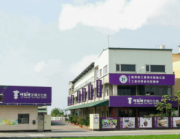
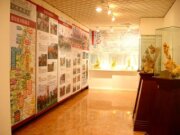
Covering roughly 330 m², the center sits beside the Farmers’ Association’s Shan-jiao office, converted from an idle granary and faced in red brick. Inside, themed zones—Hat & Mat Culture, Sales, Rural Antiquities, Rice Culture, and Folk Customs—tell the full story of rush weaving. A demonstration area and DIY classroom let visitors try their hand at the craft, bringing them closer to the trade. Outside, plots of mat rush and Flame Mountain red pines set against rice-field murals create a landscape that changes with the seasons, offering the public the best way to experience the plant firsthand.