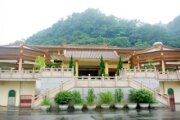
Jiufen’s early wooden theater, Jishan Tea Garden, stood on Jishan Street, where a troupe is documented performing in 1916. As gold mining grew during the Japanese colonial period, a separate theater, Shengping Zuo, received its building permit in 1931. It was completed in 1932 at the intersection of Shuqi Road and Qingbian Road, with a stone ground floor and a wooden upper floor. It was renamed Shengping Theater after the war. During renovations in the 1960s, hollow bricks replaced the upper floor’s wooden walls.
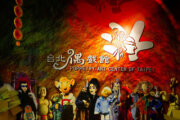
In its heyday, Taiwanese opera, films, spoken drama and glove puppetry filled the program. Spectators crowded into the aisles. The mining downturn, population loss and the spread of television contributed to the end of regular theater operations in 1986. The old theater and the square in front later served as filming locations. Both A City of Sadness and A Borrowed Life used scenes around the theater.
New Taipei designated Shengping Theater a commemorative building. It reopened after restoration in 2011 and is managed by the Gold Museum. Inside, the 1960s setting is recreated with an old-style ticket window, film posters and a carbon-arc projector. The theater also hosts film screenings, exhibitions and cultural events.