Simplified Chinese, Japanese, English, Korean
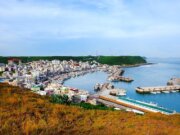
Located in the Lock Port Village, Magong City, Penghu County, within a natural inlet, there is a second‑class fishing port known as Lock Port. It serves as the central fishing port of the southern part of Magong Island. In May of the 42nd year of the Republic (1943), a 388‑meter stone‑battered breakwater and a 240‑meter pier were constructed, along with a fueling station and a 127‑meter seawall. In 1966, the Central Acceleration Plan provided subsidies to complete dredging of the pier and berthing areas.
Lock Port Fishing Port is equipped with a fueling station, ice storage facility, fishing gear storage yard, auction house, and other facilities, allowing for supplies to be stocked locally and reducing the travel distance for fishing vessels to Magong for resupply. It functions as an auxiliary harbor for Magong Port. The on‑shore fishing infrastructure includes a fish market, freezer, ice factory, fueling station, and fishermen’s activity center, making the facilities well‑equipped, though some catch still needs to be transported to Magong fishing port for sale.
The fish market inside Lock Port is a famous fish market in Penghu. Every morning and afternoon, fishing vessels set out to catch fish and return to the harbor to sell them, especially during the afternoon market session when people from villages across Penghu specifically come to Lock Port to buy fish.
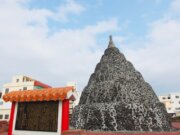
Next to the harbor stands the Zhi‑Wei Palace, home to Penghu’s tallest temple statue dedicated to the Purple Star Emperor. The statue, visible from the airplane, cost over a hundred million yuan and took about ten years to complete. The seven‑storey palace is a must‑visit attraction in Penghu’s Lock Port. Nearby are the North and South Stone Towers of Lock Port, built by ancestors to ward off evil winds and calamities.
**Suggested Stay Duration:** 1 hour
Located in the Lock Port Village, Magong City, Penghu County, within a natural inlet, there is a third‑class fishing port known as Lock Port. It serves as the central fishing port of the southern part of Magong Island. In May of the 42nd year of the Republic (1943), a 388‑meter stone‑battered breakwater and a 240‑meter pier were constructed, along with a fueling station and a 127‑meter seawall. In 1966, the Central Acceleration Plan provided subsidies to complete dredging of the pier and berthing areas.