The Dharma Drum Mountain was developed from the "Chinese Buddhist Culture Center" and the "Farm Zen Monastery" founded by Venerable Dongchu. In 1955, Venerable Dongchu built the Chinese Buddhist Culture Center in Beitou to promote Buddhist culture and provide winter relief. In 1971, he led his disciples to develop and cultivate the land on the Guandu Plain. In 1975, a farmhouse was completed and used, and Venerable Dongchu named it "Farm Zen Monastery" with the aim of "focusing on Chan practice and farming for a living". In 1977, Venerable Dongchu passed away peacefully, and entrusted Master Sheng Yen to inherit his teachings and take over as the abbot of the Chinese Buddhist Culture Center and Farm Zen Monastery, dedicating himself to promoting the Dharma and Chan practice. Due to the increasing number of devotees, in order to find a long-term, stable, and futuristic site for the construction of a Daochang (Buddhist monastery), on July 1989, Master Sheng Yen officially announced that the new Daochang in Jinshan would be named "Dharma Drum Mountain", and outlined a clear blueprint for the future construction of the Daochang - to utilize its functions in education, culture, and Dharma propagation, providing a good environment for general devotees to practice the Dharma and purify their minds and bodies, and using the Dharma to stabilize people's minds and society. (Source: Dharma Drum Mountain's Official Website)
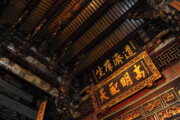
The architectural style of Dharma Drum Mountain's Farm Zen Monastery combines traditional Chan (Zen) elements with modern design, and blends harmoniously with the surrounding natural environment. The overall architectural style is simple and unassuming, emphasizing openness and the introduction of natural light, aiming to create a harmonious and serene space for practice and living.