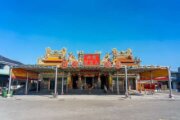
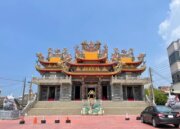
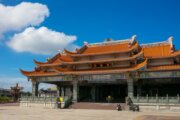
Taisheng Temple stands in Haomei, a Budai village once known as Wanggang. Fishers traditionally prayed here to Mazu for safety before putting to sea. The clothing of its carved wooden Wanggang Mazu resembles that on late Ming portraits of titled women. The official heritage record dates the carving to around the Ming–Qing transition and lists it as an important antiquity. A local story says Dutch soldiers sheltered the statue in their fort after a flood destroyed its shrine, giving it the nickname “Mazu of the Official Residence.” Another story associates a cavity in the base with worshippers taking slivers of wood for folk remedies.
During the third lunar month, Taisheng Temple’s sea pilgrimage reflects the area’s fishing traditions. Visiting Mazu images are traditionally carried in palanquins to Haomei Fishing Harbor, then taken out by boat for a shared ceremony offshore. Peitian Temple in Puzi and Antian Temple in Budai are among the temples that have taken part. The procession continues a local tradition of praying for safe voyages and fishing.