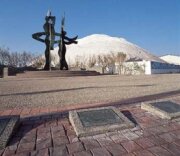
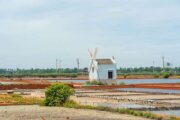
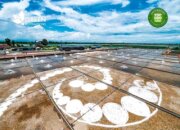
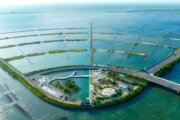
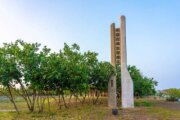
The flat, sunny coast of Budai already had salt pans during the Qing dynasty’s Qianlong reign. In the 1820s, salt merchant Wu Shangxin rebuilt the Zhounan works around Xincuozi and improved production by separating evaporation and crystallization into different ponds. The industry expanded under Japanese rule, and Budai Harbor shipped salt to mainland China and Japan. The historic Budai Salt Fields stretched across Dongshi, Budai and Yizhu. Around ten production areas lay between Zhangtan in the north and Xinwen in the south, with small trains carrying salt between the pans.
Mechanical harvesting later replaced much of the manual work, and large sections ceased production as the industry declined. Some old pans and neighboring Haomeiliao wetlands now provide feeding grounds for herons, egrets and winter migrants. The Budai salt mound and the separately revived Zhounan Salt Field show different sides of the former industry. The Budaizui Cultural Association uses small-scale salt making, environmental education and a thanksgiving festival to keep the village’s salt traditions alive at Zhounan.