Shangshan District, previously known as "Shanzaiding," is a township primarily engaged in agriculture. Surrounded by hills, it is abundant in local fruit production, with pineapple, mango, dragon fruit, net house papaya, water chestnuts, winter melon, and orchids being its notable specialties. The Shangshan District Agricultural and Food Council guides homemaking class members to utilize locally available fruits for craft production, manufacturing various fruit pastries as regional specialty souvenirs to market statewide, generating considerable business opportunities.
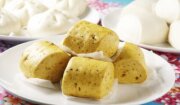
Pineapple and mango yield the highest fruit output in Shangshan District. Auntie Tian produces pineapple tarts using locally grown pineapples, creating pineapple filling by stewing sugar with a small amount of winter melon. To ensure freshness, she still maintains a made-to-order production model up to today. After gaining popularity with pineapple tarts, Auntie Tian further developed mulberry and mango tarts, both receiving favorable reviews. Particularly, the golden yellow mango tarts, carrying the rich aroma of mangos, achieved sales comparable to pineapple tarts, becoming a popular souvenir for traditional festivals.
In summer when mangoes are in season, besides making mango tarts, they can also be transformed into dried mango snacks. Each summer during mango harvests, the Agricultural Association mobilizes Auntie Tian to help dry batches of mangoes. They peel fresh Aiwen mangoes into slices and place them in baking machines for 16 hours of low-temperature baking to create delicious dried mango snacks. The stainless steel tray drying method yields uniformly flat and neat-looking dried mangoes, far superior in appearance and texture to those using mesh board baking which causes visible grid marks on their surfaces.
Winter melon herbal tea represents another recent innovation. Auntie Tian first soaks winter melon in lime water for one week, thoroughly cleans it, and then processes it by stewing 25 kg of winter melon with 20 kg premium rock sugar to produce concentrated winter melon broth. Consumers can simply mix the product with water at home to recreate authentic herbal tea, or further combine it with fresh milk or lemon juice to make flavored beverages.