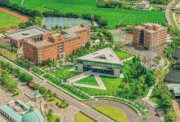
At 1:47 a.m. on 21 September 1999, the Chi-Chi earthquake struck central Taiwan with a local magnitude of 7.3. More than 2,400 people died and many buildings were damaged. At Guangfu Junior High School in Wufeng, the Chelungpu Fault ran through the campus. The eastern part of the playing field rose about 2.6 metres and several school buildings were badly damaged. The National Museum of Natural Science later developed the site as the 921 Earthquake Museum of Taiwan, preserving the faulted landscape and damaged buildings in place.
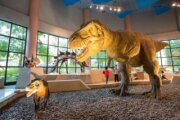
On 21 September 2004, the Chelungpu Fault Gallery opened and the Image Gallery displays were renewed. The entire site opened on 21 September 2007 with three more galleries. The fault gallery uses models and interactive exhibits to explain how the ground moved at the preserved site. The Image Gallery occupies the former school activity centre, which remained standing. Its photographs and recordings document the experience of residents and rescue workers.
The three newer galleries cover earthquake engineering, disaster preparedness and reconstruction. The Reconstruction Records Hall preserves documents, photographs and accounts of relief and rebuilding by different organisations. Together, the galleries connect the physical fault, local memories and the work that followed.
In the museum’s early years, the old school swimming pool was converted into the 921 Water Play Pool. The Image Gallery’s school reconstruction exhibit presents models and illustrations of campuses that received the Far Eastern Architectural Award’s special prize for reconstruction after the earthquake. The models show how learning spaces were redesigned in the years that followed.